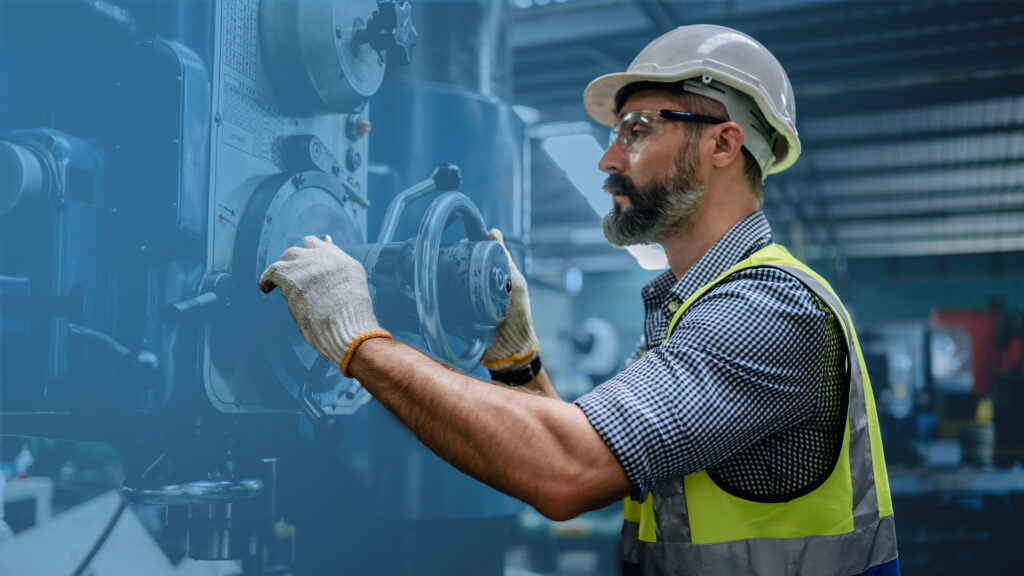
Machinery in the workplace can pose serious risks. People may be struck by moving parts or ejected material, become trapped between components, or have body parts drawn into rollers, belts, or drive mechanisms. Sharp edges can lead to cuts or amputations, while hot surfaces or emissions can cause burns and scalds.
Real incidents and consequences
There have been several serious or fatal injuries involving machinery in recent years. Recent HSE prosecutions include:
- An employee became trapped in an unguarded machine at a packaging materials company and suffered fatal crush asphyxia. The company was fined £277,500 and ordered to pay £20,000 in costs.
- A worker at an animal feed manufacturer had their foot entangled in a rotating auger due to insufficient guarding. The company was fined £500,000 and ordered to pay £4,455 in costs.
- A worker had both legs trapped when the cutting bed of a laser cutting machine dropped during fault finding. One leg was later amputated. The company was fined £96,333 and ordered to pay £10,701 in costs.
- A packaging company employee lost part of a finger after becoming entangled in machinery while clearing a tangle. The company was fined £20,000 and ordered to pay £2,932 in costs.
- A sawmill worker lost a leg when a conveyor restarted unexpectedly during an attempt to clear a jammed log. The company was fined £160,000 and ordered to pay £7,395.51 in costs.
Managing risks before machinery is used
Before using machinery, it’s important to identify the risks and apply control measures. Where possible, eliminate the hazard altogether. If this isn’t practical, use engineering controls like guarding and protective devices.
Where engineering controls alone are not sufficient, management controls such as safe systems of work, supervision, and training become essential.
Safety during maintenance and non-routine tasks
Machinery must be safe not only during regular use, but also during setup, cleaning, repairs, and routine maintenance. This includes ensuring machines are properly switched off, isolated, or locked out before intervention.
Machine guarding and protective measures
Fixed and interlocked guards
The preferred solution is fixed guarding that fully encloses dangerous parts. Where frequent access is required, interlocked guards may be used. These ensure that moving parts stop before anyone can reach the danger zone.
Opening an interlocked guard will stop the hazardous part, and machines generally will not restart automatically unless specifically designed to do so.
Protection from ejected materials
Guards also serve to prevent people being struck by ejected parts or processed material. Failures in equipment or unsuitable materials can lead to sudden ejections with serious consequences.
Alternative protective devices
If guarding is not practical, distance-based protective devices can be used. Examples include:
- Light curtains or pressure sensors that stop the machine if approached
- Two-handed controls
- Remote handling tools to keep operators at a safe distance
A combined approach to machinery safety
Most machinery will require a combination of control measures. This includes fixed or interlocked guards, safety devices, appropriate training, and clear supervision to ensure safe operation and maintenance.
Support from PIB Risk Management
Our Health & Safety Risk Management specialists can help you assess machinery risks, review guarding systems, and implement effective control measures.