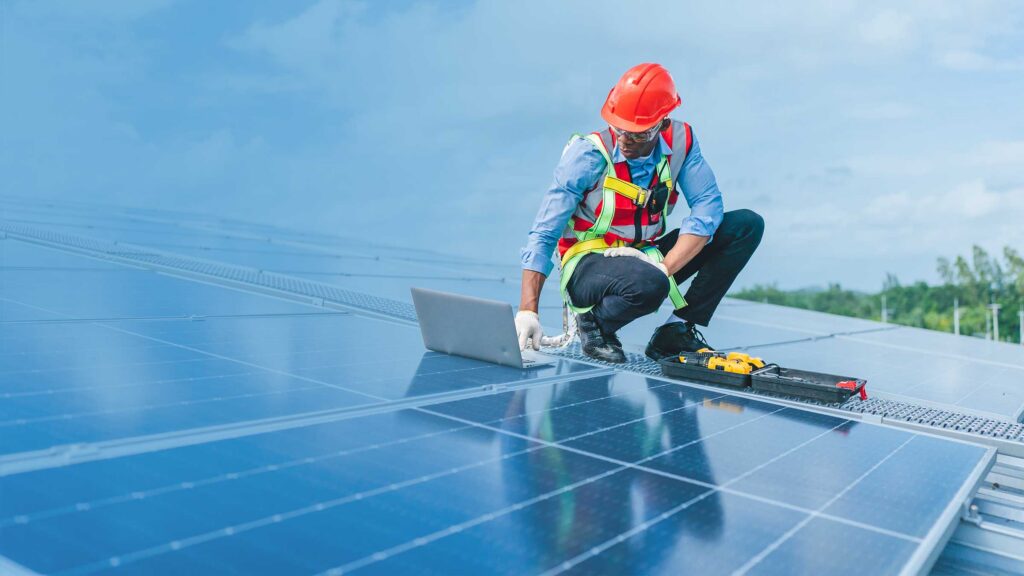
Solar panels are becoming an increasingly familiar sight on warehouses, factories, offices and other commercial buildings.
For many businesses, they form an important part of reducing energy costs and carbon emissions. But new research suggests fire risk needs to remain part of the decision.
Research published by insurer QBE, based on Freedom of Information requests to UK fire services, recorded 212 fires involving solar panels across all property types during 2025, compared with 91 in 2022 – an increase of 133%. Over the same period, the number of solar installations increased by 52%.
The risk: solar panel fires in commercial and industrial buildings
The overall numbers remain small compared with the total number of installations, but the direction of travel deserves attention.
Commercial premises saw 48 reported fires involving solar panels in 2025, up from 33 the previous year. At industrial premises, incidents rose from six to 14. QBE also found that the number of incidents where fire spread beyond the solar installation increased from 33 in 2022 to 88 in 2025.
The research identified DC cabling and connectors as the most frequently recorded cause during 2025.
The risk also extends beyond the panels themselves. Inverters, electrical isolation, roof construction, maintenance arrangements and, where installed, battery storage can all affect the overall risk presented by a system.
Who should consider solar panel fire risks?
The issue is relevant both to organisations considering a new installation and those that already have solar panels in place.
Owners and managers of residential buildings may also increasingly encounter smaller plug-in systems. London Fire Brigade has advised Responsible Persons and building managers to consider their impact on escape routes, external walls, electrical installations, emergency planning and insurance arrangements.
What could solar installations mean for your business?
Solar should not be viewed simply as an energy project. An installation changes the electrical and fire-risk profile of a property. Depending on the system and building, a fire could affect property, stock, equipment and the ability of the business to continue operating.
This makes early risk consideration important, ideally before equipment specification and installation, rather than once the panels are already on the roof.
For businesses with insurance programmes, it is also sensible to establish whether your broker or insurer needs information about a proposed installation, roof construction, battery storage or ongoing maintenance arrangements.
How can businesses manage solar panel fire risks?
QBE recommends that businesses consider the following:
- Use accredited installers.
- Pay particular attention to cabling and connector quality.
- Maintain accessible electrical isolation arrangements.
- Consider roof combustibility.
- Carry out ongoing inspections.
- Ensure battery units are appropriately located, ventilated and accessible for maintenance and emergency response.
Businesses may therefore want to consider the full lifecycle of the installation: design, installation, commissioning, inspection, maintenance and eventual replacement.
Fire risk assessment and insurance advice
PIB Risk Management can help businesses consider the fire and property risks associated with changes to their premises, including through fire risk assessment. Where appropriate, involving your insurance advisers at an early stage can also help identify information or risk improvements that may need to be considered.
The takeaway: consider solar energy and fire safety together
Renewable technology can bring real benefits, but installing it should not mean introducing unmanaged risk. The strongest approach considers energy, property protection, fire safety and insurance together.
Sources: QBE solar panel fire research; London Fire Brigade plug-in solar advice.