Occupational exposure to silica dust remains one of the most significant health risks for workers in construction, stonemasonry, quarrying, potteries, foundries and parts of the manufacturing sector.
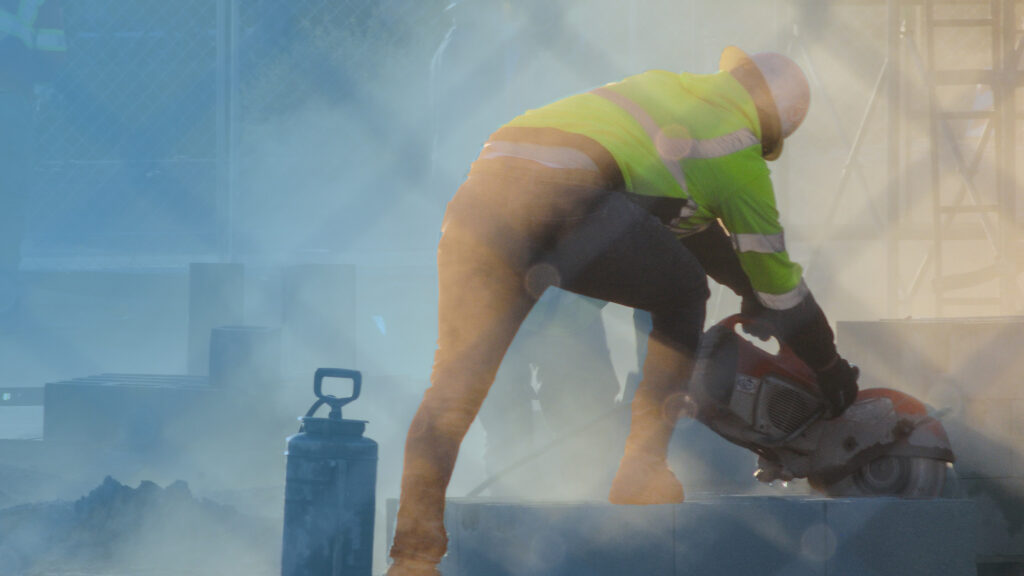
Respirable crystalline silica (RCS) is released when materials such as concrete, brick, stone, tiles and engineered stone are cut, drilled, ground or broken. Because these particles are extremely small, they can be inhaled deep into the lungs, where they can cause serious and sometimes fatal disease.
Why silica dust is a serious health risk
Breathing in silica dust can lead to serious health conditions, including silicosis, chronic obstructive pulmonary disease (COPD), occupational asthma and lung cancer. In severe cases, exposure can contribute to early death.
Engineered stone, commonly used for kitchen and bathroom worktops, can contain very high levels of crystalline silica. The Health and Safety Executive (HSE) has published guidance on controlling exposure to silica dust and is carrying out inspections focused on businesses cutting and polishing engineered stone.
Who may be affected
Silica exposure can affect employers across a range of industries, particularly those involved in:
- Construction and demolition
- Stonemasonry and stone cutting
- Kitchen and bathroom worktop fitting
- Manufacturing artificial or engineered stone
- Quarrying
- Potteries, foundries and related manufacturing
What employers should be doing
Assess the risk
Employers should identify where silica dust may be generated and assess who could be exposed. Risk assessments should reflect the tasks being carried out, the materials used and the control measures required.
Control exposure
Exposure should be controlled at source wherever possible. Elimination or substitution should always be considered before relying on personal protective equipment. This may include using lower-silica materials, water suppression, on-tool extraction, local exhaust ventilation and safe systems of work. Dry cutting of engineered stone should be avoided.
Use suitable respiratory protective equipment (RPE)
Where respiratory protective equipment is required, it must be suitable for the task, properly fitted, maintained and supported by appropriate face fit testing where required.
Provide information and training
Workers should understand the health risks associated with silica dust, the control measures in place and how to use equipment safely. Toolbox talks and refresher training can help maintain awareness.
Consider health surveillance
Health surveillance may be required where there is a significant risk from exposure to respirable crystalline silica. Monitoring workers’ health can help identify early signs of work-related disease and support timely intervention.
Why this matters for your organisation
Managing silica dust exposure helps protect workers from serious ill health and supports compliance with health and safety legislation. It can also reduce the risk of sickness absence, compensation claims, enforcement action and prosecution.
With HSE inspections continuing and updated industry guidance available, employers should review whether their current control measures remain effective.
How PIB Risk Management can help
Our Health & Safety Risk Management specialists can help your organisation by:
- Reviewing and updating silica dust risk assessments
- Developing practical control measures and safe systems of work
- Providing toolbox talks and workforce guidance
- Advising on respiratory protective equipment (RPE) and face fit testing
- Helping you interpret current HSE guidance and industry best practice
Silica dust exposure is preventable when the right control measures are in place. Reviewing your processes, updating risk assessments and ensuring workers understand the risks can help protect your workforce and demonstrate compliance with your legal duties.